Daoism: The Path of Effortless Living
Daoism (or Taoism) is often described as a philosophy, a religion, or even an art of living. In essence, it’s a way of flowing with life rather than against it, encouraging simplicity, spontaneity, and harmony with the natural order of things. Rooted in ancient Chinese traditions, it offers a profound, yet practical wisdom on how to live with more ease and less resistance. For many, it presents an attractive alternative to the constant striving, stress, and attachment to control that tends to define modern life.
"That which offers no resistance, overcomes the hardest substance." - Laozi
What is Daoism?
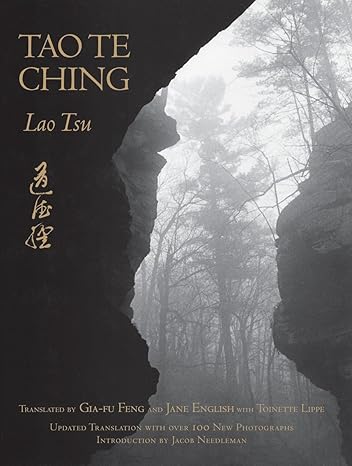
Daoism comes from the word “Dao” (or Tao), which translates to “the Way.” The concept of the Dao is both mysterious and incredibly simple. It refers to the underlying force or principle that governs the universe. Think of it as the rhythm of life itself—the natural, spontaneous unfolding of everything that exists. The Dao isn’t something that can be seen or touched, but it’s always present, shaping and guiding all that is.
Laozi, the author of the Dao De Jing, said it best: “The Dao that can be spoken is not the eternal Dao.” This quote is both frustrating and liberating—it means that the moment we try to put the Dao into words, we’ve already missed it. Yet, this elusive “Way” is available to anyone willing to let go of the need to control and simply allow life to unfold.

Wu Wei: Effortless Action
Central to Daoism is the concept of wu wei, often translated as “non-action” or “effortless action.” At first glance, this might sound like an invitation to do nothing, but it’s more nuanced than that. Wu wei is about aligning with the natural flow of things, acting in harmony with the situation rather than forcing your will onto it.
It’s the idea that the most effective actions arise naturally, without effort, when you are in tune with the present moment. It’s like a master painter, whose brush strokes flow effortlessly across the canvas. The painter isn’t overthinking or struggling; they’re allowing their creativity to move through them. In the same way, Daoism teaches us to act in accordance with the natural rhythms of life, without straining or resisting.
Think about the last time you were in a flow state—when everything felt easy, and time seemed to disappear. That’s wu wei in action. It’s a reminder that life doesn’t always have to be a constant uphill battle. Sometimes, the best approach is to let go and let things happen in their own time.
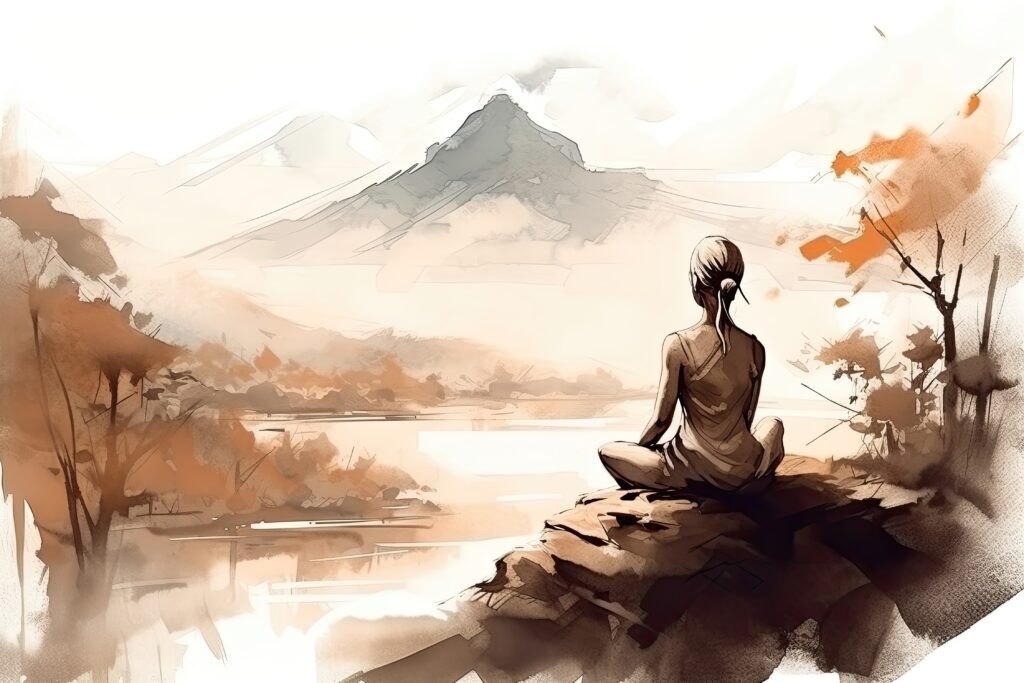
“The wise man knows that it is better to sit on the banks of a remote mountain stream than to be emperor of the whole world.”
― Zhuangzi
Simplicity and Balance
Daoism also emphasizes simplicity. In a world that often glorifies busyness and complexity, Daoism calls us to simplify our lives, strip away excess, and return to what’s essential. This doesn’t mean abandoning all responsibilities or possessions, but it does encourage us to be more mindful of how we engage with them.
One of the key teachings of the Dao De Jing is that the wise person knows how to avoid extremes and maintain balance. It encourages moderation in all things, whether it’s work, play, relationships, or material pursuits. If we push too hard in one direction, we risk losing our equilibrium. Daoism invites us to find that sweet spot where we’re neither overreaching nor underperforming, but simply in harmony with the flow of life.
This balance can also be seen in the famous symbol of Daoism: the Yin-Yang. It represents the complementary forces of light and dark, masculine and feminine, active and passive. These opposing forces are not in conflict, but in dynamic balance, each containing a seed of the other. It’s a reminder that life is full of cycles and contrasts, and our well-being depends on embracing both sides of the spectrum.
The Role of Nature
Nature holds a special place in Daoism. It’s seen as the ultimate expression of the Dao, a living example of how things flourish when left to their own devices. A tree doesn’t struggle to grow; it simply grows. A river doesn’t fight its path; it flows around obstacles. Nature shows us that life thrives when it follows its natural course.
This is why Daoism encourages us to reconnect with nature and observe its ways. Whether it’s taking a quiet walk in the woods or simply watching the clouds drift by, spending time in nature helps us attune to the Dao and reminds us of the effortless flow of life. In many ways, Daoism invites us to live more like nature: to be adaptable, flexible, and present, trusting that life will unfold as it should.
Letting Go of Control
One of the biggest challenges in life is our tendency to cling to control. We want things to go a certain way, and when they don’t, we get frustrated or anxious. Daoism teaches that this need for control is one of the main sources of suffering. By trying to impose our will on the world, we create tension and resistance.
Instead, Daoism suggests that we adopt a more relaxed approach. It’s not about giving up or being passive, but about recognizing that many things in life are beyond our control. We can’t control the weather, other people’s actions, or the passage of time. What we can control is how we respond to these things. By letting go of our need to control the outcome, we free ourselves from unnecessary stress and open up to a more peaceful, flowing way of being.
This doesn’t mean we should sit back and do nothing. Instead, it means we should focus on the things we can influence, and trust that the rest will unfold as it should. In the words of Laozi, “When I let go of what I am, I become what I might be.”

Daoism in Everyday Life
So, how can we apply Daoist principles in our everyday lives? It might sound like a tall order, but Daoism is actually very practical. Here are a few simple ways to bring Daoism into your daily routine:
Practice mindfulness: Take time each day to slow down and be present. Whether it’s through meditation, deep breathing, or simply paying attention to your surroundings, mindfulness helps you align with the flow of life.
Let go of the need for control: The next time you feel anxious or stressed, ask yourself: “What am I trying to control?” Often, the source of our stress comes from trying to force something that’s outside our influence. Instead, focus on what you can do and trust the rest to unfold.
Spend time in nature: Reconnect with the natural world by going for a walk, sitting in a park, or just observing the sky. Nature reminds us of the Dao’s effortless flow and helps us attune to its rhythms.
Simplify your life: Look for areas where you might be overcomplicating things. Can you reduce unnecessary commitments or material possessions? Simplicity creates space for the natural flow of life.
Embrace wu wei: In your work, relationships, and daily activities, notice where you might be pushing too hard or forcing things. Can you step back and allow things to happen more naturally? Often, the best results come when we stop trying to control everything.
“Just when the caterpillar thought the world was over, it became a butterfly.”
― Zhuangzi
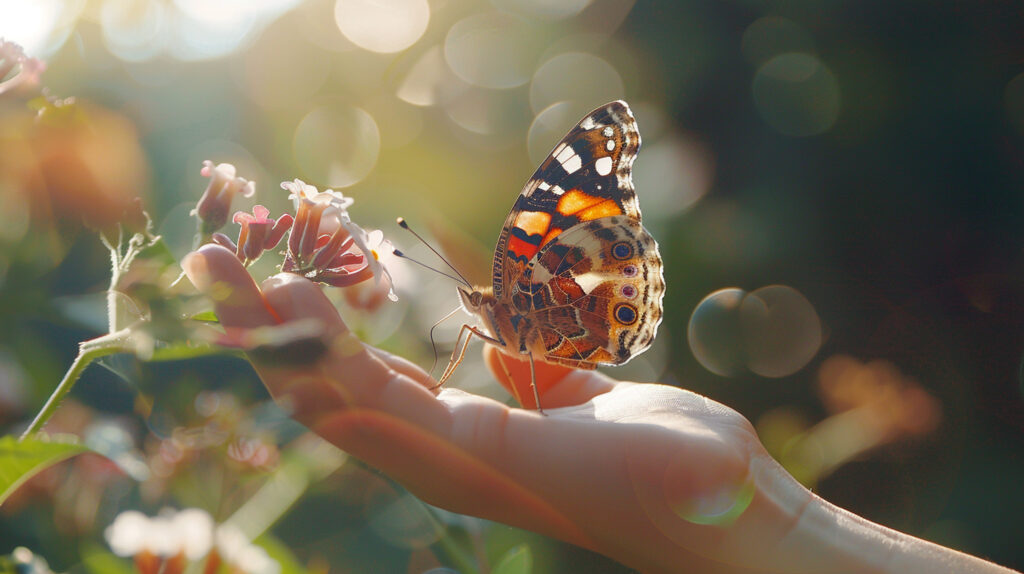
“Once upon a time, I dreamt I was a butterfly, fluttering hither and thither, to all intents and purposes a butterfly. I was conscious only of my happiness as a butterfly, unaware that I was myself. Soon I awaked, and there I was, veritably myself again. Now I do not know whether I was then a man dreaming I was a butterfly, or whether I am now a butterfly, dreaming I am a man.”
― Zhuangzi
Conclusion: The Art of Living Effortlessly
Daoism offers us a refreshing perspective in a world that often values hustle and control. It reminds us that life has its own flow, and when we learn to align with that flow, we experience more ease, peace, and fulfillment. By practicing wu wei, simplifying our lives, reconnecting with nature, and letting go of control, we can live in greater harmony with ourselves and the world around us.
“A journey of a thousand miles begins with a single step.” – Laozi
Related Articles
Zen: Living Practice
Zen is a school of Mahayana Buddhism that emphasizes meditation (zazen), direct experience, and simplicity over intellectual reasoning or religious rituals.
The Quiet Power of Qi Gong: Finding Harmony in Movement
At its core, Qi Gong is a practice of movement, breath, and intention. For some, it’s a way to ease physical discomfort—relieving tension, reducing pain, and improving flexibility.
Good Books